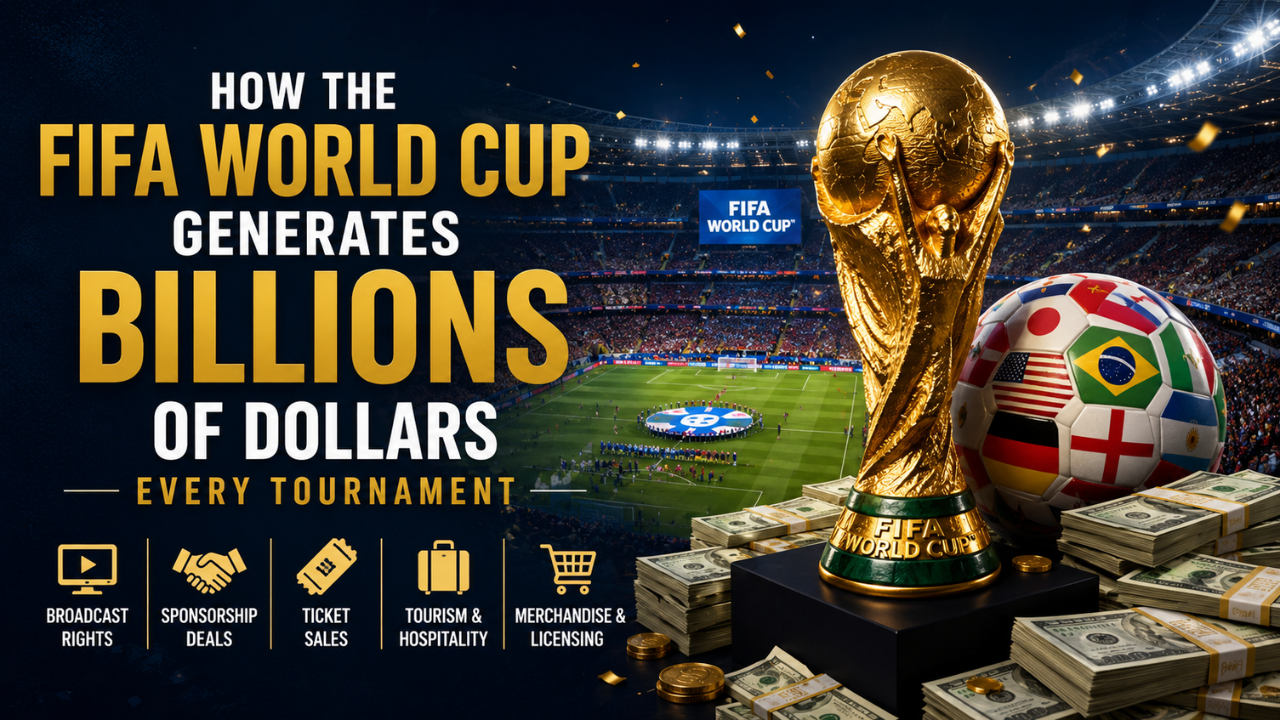
The FIFA World Cup is often described as the biggest sporting event on the planet, but football matches are only one part of the story. Every four years, the tournament attracts billions of viewers, generates enormous economic activity, and creates business opportunities that extend far beyond the stadium. While fans focus on goals, trophies, and memorable moments, governments, corporations, broadcasters, and sponsors view the World Cup as one of the most valuable commercial events in the world.
What makes the tournament unique is its global reach. Very few events are capable of capturing the attention of people from nearly every country at the same time. The World Cup brings together different cultures, languages, and markets under a single brand. This level of attention has immense financial value, which explains why companies are willing to spend extraordinary amounts of money to be associated with the competition.
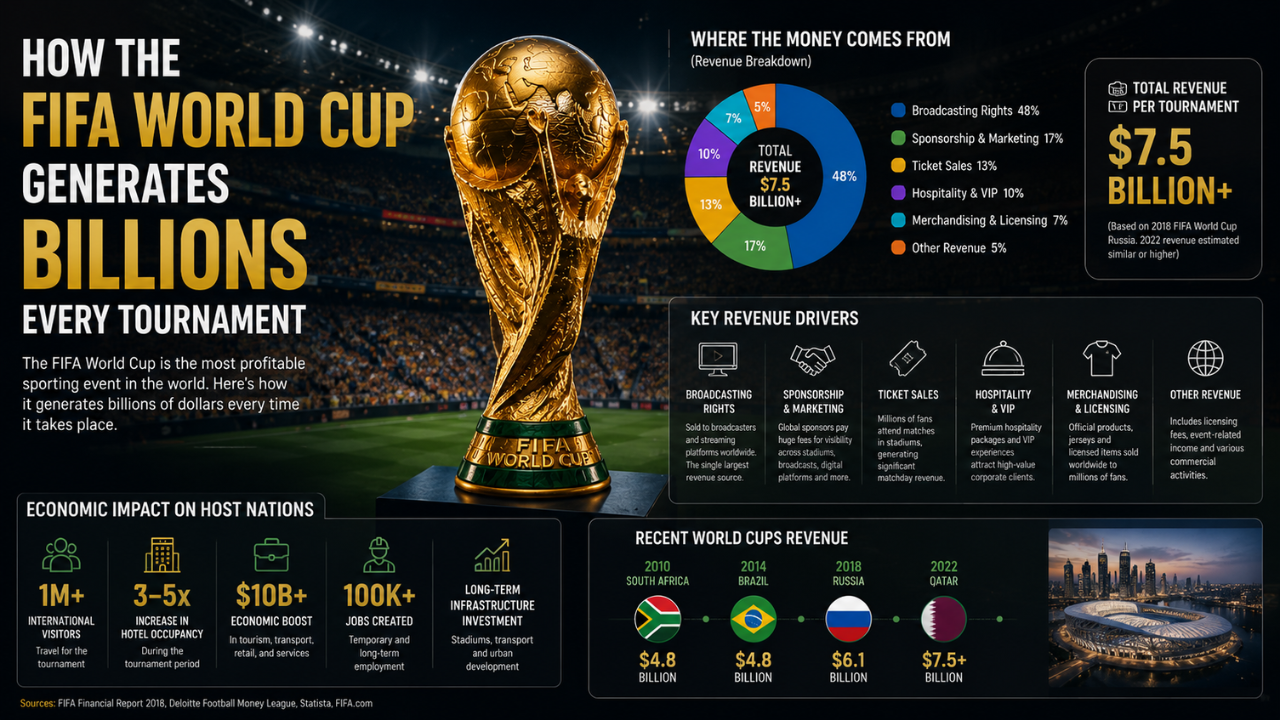
The billions generated by the World Cup do not come from a single source. Instead, the tournament operates as a massive economic ecosystem where broadcasting rights, sponsorship agreements, ticket sales, tourism, merchandise, and advertising all contribute to its financial success. Understanding how these revenue streams work reveals why the World Cup has become one of the most profitable events in modern sports.
Why Broadcasting Rights Are the Tournament’s Biggest Source of Revenue
The largest portion of World Cup revenue comes from broadcasting rights. Television networks and streaming platforms compete aggressively for the opportunity to show World Cup matches because they know the tournament attracts enormous audiences. Millions of viewers tune in to watch games live, creating advertising opportunities that few other events can match.
Broadcasters understand that football fans are highly engaged. Unlike many forms of entertainment, sporting events are typically watched in real time, which makes advertisements more valuable. A World Cup final can attract hundreds of millions of viewers worldwide, allowing networks to charge premium rates for commercial slots. As a result, broadcasters are willing to pay substantial sums to secure exclusive rights.
For FIFA, broadcasting agreements represent a reliable and highly profitable source of income. The organization’s ability to sell viewing rights across different regions ensures that the tournament reaches a truly global audience while generating billions in revenue. In many ways, television and digital broadcasting transformed the World Cup from a sporting competition into a global entertainment product.
The Power of Sponsorship Deals
Sponsorship is another major reason the World Cup generates such impressive financial results. Some of the world’s largest companies invest heavily in partnerships with FIFA because they want their brands associated with one of the most watched events on Earth.
Global corporations see the tournament as a unique opportunity to reach consumers across multiple continents simultaneously. Instead of launching separate campaigns in different countries, a World Cup sponsorship allows companies to market themselves through a single global platform. This efficiency makes sponsorship agreements extremely valuable.
The visibility provided by the tournament extends far beyond stadium advertising. Sponsors receive exposure through television broadcasts, digital content, social media campaigns, promotional events, and official merchandise. The result is a level of brand recognition that would be difficult and expensive to achieve through traditional advertising alone.
Because demand for sponsorship opportunities is so high, FIFA can negotiate lucrative agreements that contribute significantly to the tournament’s overall revenue.
How Tourism Creates Economic Growth for Host Nations
When a country hosts the World Cup, the economic impact extends beyond football. Millions of visitors travel to attend matches, support their national teams, and experience the host nation’s culture. These visitors spend money on hotels, restaurants, transportation, entertainment, and local attractions.
For many businesses, the tournament represents a rare opportunity to benefit from a sudden increase in international tourism. Hotels often operate at full capacity during the event, while restaurants and retail stores experience increased customer activity. Airports, transportation services, and tourism operators also benefit from the influx of visitors.
The economic effects can be felt long after the final match has been played. Host countries frequently use the tournament as an opportunity to showcase themselves to the world. Improved infrastructure, increased international visibility, and expanded tourism industries can continue generating benefits for years after the event concludes.
Although hosting the World Cup requires significant investment, many governments view it as an opportunity to stimulate economic activity and strengthen their global image.
Ticket Sales and Matchday Revenue
Ticket sales remain an important part of the World Cup’s financial model. Fans from around the world compete for the opportunity to watch matches in person, creating strong demand for tickets throughout the tournament.
The atmosphere inside World Cup stadiums is one of the event’s most recognizable features. Supporters travel thousands of miles to watch their teams compete, and many consider attending a World Cup match a once-in-a-lifetime experience. This emotional connection allows organizers to generate substantial revenue through ticket sales.
Matchday spending also contributes to the tournament’s economic success. Fans purchase food, beverages, souvenirs, and other products while attending games. These purchases may seem small individually, but when multiplied across millions of spectators, they become a meaningful source of income.
The combination of ticket sales and stadium-related spending helps ensure that every match contributes to the tournament’s overall profitability.
The Global Business of Merchandise
Official merchandise represents another significant revenue stream. Football fans enjoy purchasing products that help them celebrate their teams and favorite players. Jerseys, scarves, hats, footballs, and collectibles become highly sought-after items during the tournament.
The popularity of football creates a massive consumer market. Supporters often purchase merchandise not only for themselves but also as gifts and souvenirs. This demand extends beyond the host nation, with products being sold across the world through retail stores and online platforms.
The commercial value of merchandise increases when iconic moments occur. A memorable goal, a surprising underdog story, or a historic championship victory can dramatically increase demand for specific products. Manufacturers and retailers benefit from these emotional connections, while FIFA receives revenue through licensing agreements.
As a result, merchandise has become an important component of the World Cup’s broader business strategy.
How Digital Media Expanded the Tournament’s Reach
The rise of social media and digital platforms has transformed the economics of the World Cup. In previous decades, fans primarily experienced the tournament through television broadcasts. Today, highlights, interviews, analysis, and behind-the-scenes content are shared instantly across multiple platforms.
Digital engagement increases the value of sponsorships and advertising opportunities. Brands can connect with audiences through interactive campaigns, social media partnerships, and online promotions that extend far beyond traditional broadcasts.
The ability to engage fans throughout the day rather than only during matches has created new opportunities for revenue generation. Every post, video, and digital interaction contributes to the tournament’s overall visibility and commercial appeal.
This expanded reach helps explain why the World Cup continues to grow as a global business despite changes in media consumption habits.
Why Companies View the World Cup as a Marketing Goldmine
From a business perspective, the World Cup provides something that is increasingly difficult to find: a truly global audience paying attention to the same event at the same time. In an era of fragmented media consumption, this level of attention is extraordinarily valuable.
Companies understand that consumers form emotional connections during major sporting events. Moments of celebration, disappointment, and national pride create powerful memories. Brands that successfully align themselves with these emotions can strengthen customer relationships and increase recognition.
This explains why corporations invest so heavily in World Cup advertising campaigns. The tournament offers access to billions of potential customers in an environment where engagement is naturally high. Few marketing opportunities can match that combination of scale and emotional impact.
The Economic Legacy of the FIFA World Cup
Beyond the immediate revenue generated during the tournament, the World Cup often leaves a lasting economic legacy. Host nations frequently invest in infrastructure projects such as stadiums, transportation systems, and urban development initiatives. While the long-term success of these investments varies, they can contribute to broader economic growth.
The tournament also creates opportunities for local businesses, encourages tourism, and increases international awareness of the host country. In some cases, these benefits continue long after the event has ended, helping justify the substantial resources required to organize such a large-scale competition.
For FIFA, the World Cup serves as the foundation of its global business model. The tournament’s ability to attract audiences, sponsors, broadcasters, and governments ensures that it remains one of the most financially successful sporting events in history.
Every four years, football becomes the center of global attention. While fans celebrate unforgettable moments on the pitch, an equally remarkable story unfolds behind the scenes—a story of business, economics, and the immense financial power of the world’s most popular sport.