
Everyone loves talking about motivation when things are going well. It is easy to feel inspired when progress is visible, goals seem achievable, and life appears to be moving in the right direction. The real challenge begins on the days when nothing goes according to plan. Those are the days when energy feels low, confidence starts fading, and even simple tasks seem more difficult than usual.
Many people assume that successful individuals avoid these struggles. They imagine that high achievers wake up every morning feeling focused, disciplined, and excited to work toward their goals. The truth is far less glamorous. Successful people experience bad days just like everyone else. They feel discouraged, frustrated, and exhausted. They encounter setbacks, disappointments, and moments of self-doubt.
What separates them from others is not the absence of difficult days. The difference is how they respond when those days arrive. Instead of allowing temporary emotions to control their actions, they rely on habits, systems, and perspectives that help them continue moving forward.
Why Motivation Isn’t Something You Can Always Rely On
One of the biggest misconceptions about success is the belief that motivation is a constant source of energy. In reality, motivation is highly unpredictable. Some days it appears naturally, making work feel effortless. Other days, it disappears completely, leaving people wondering why they ever started.
The problem with relying entirely on motivation is that emotions change constantly. Stress, lack of sleep, unexpected challenges, or personal problems can affect how motivated you feel. If your progress depends entirely on feeling inspired, your consistency will suffer whenever those feelings disappear.
Successful people understand this reality. They do not expect motivation to show up every day. Instead, they create routines that allow them to keep working regardless of how they feel. They recognize that discipline often matters more than inspiration because discipline remains available even when motivation is nowhere to be found.
This shift in thinking changes everything. Instead of asking, “Do I feel motivated today?” they ask, “What needs to be done today?” That small difference creates a powerful advantage over time.
Successful People Accept That Bad Days Are Part of the Process
Many people become discouraged because they interpret a bad day as a sign that something is wrong. They assume feeling unmotivated means they are losing passion for their goal or moving in the wrong direction. Successful people view these moments differently.
They understand that progress is never perfectly linear. Every journey includes ups and downs. Some days are productive and rewarding, while others feel frustrating and slow. Neither type of day determines the outcome.
Imagine an athlete preparing for a major competition. There will be days when training feels excellent, and confidence is high. There will also be days when performance feels poor and energy is low. The athlete does not abandon the entire goal because of one difficult session. They continue because they understand that long-term success is built over months and years, not a single day.
This mindset helps successful people avoid emotional overreactions. They recognize that one bad day is simply one small part of a much larger journey.
They Focus on Showing Up Rather Than Being Perfect
One of the most powerful habits successful people develop is the ability to show up even when they do not feel like it. On difficult days, they lower the pressure without abandoning the process.
A writer may not feel capable of producing their best work, but they still sit down and write. An entrepreneur may feel overwhelmed, but they still complete important tasks. A person pursuing fitness goals may not have the energy for an intense workout, but they still go for a walk or complete a shorter session.
This approach is important because consistency creates momentum. When people completely stop whenever they feel unmotivated, restarting becomes much harder. By continuing in some capacity, they maintain their connection to the goal.
Success is often less about dramatic bursts of effort and more about the ability to keep showing up, especially when enthusiasm fades.
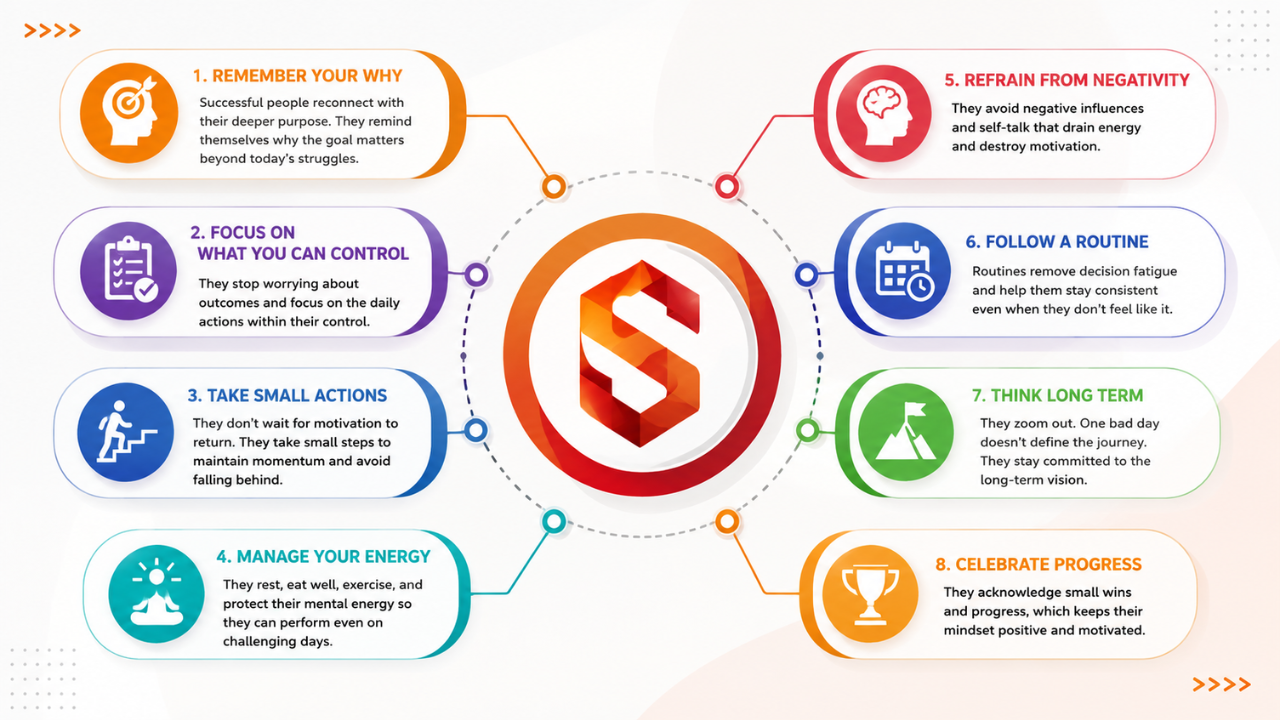
They Remember Their Bigger Purpose
Bad days have a way of making short-term discomfort feel larger than it actually is. Problems that normally seem manageable suddenly feel overwhelming. During these moments, successful people reconnect with the deeper reason behind their actions.
They remind themselves why the goal matters in the first place. They think about the future they want to create, the opportunities they want to build, and the person they are trying to become. This larger perspective helps them see beyond temporary emotions.
Purpose provides stability when motivation becomes unreliable. A person driven only by excitement will struggle when challenges appear. A person connected to a meaningful purpose can continue moving forward even when the journey becomes difficult.
The stronger the reason behind a goal, the easier it becomes to remain committed during difficult periods.
They Control What They Can Control
One reason bad days feel overwhelming is that people often focus on factors outside their control. They worry about outcomes, other people’s opinions, unexpected setbacks, or circumstances they cannot change.
Successful people shift their attention toward actions they can control. Instead of obsessing over results, they focus on effort. Instead of worrying about external validation, they focus on improvement.
This approach creates a sense of stability. While outcomes are often unpredictable, effort remains within your control. You may not be able to guarantee success today, but you can choose to take meaningful action.
By focusing on controllable factors, successful individuals reduce unnecessary stress and maintain a greater sense of confidence during challenging periods.
They Protect Their Environment
Motivation is heavily influenced by the environment. Successful people understand that the people, content, and information they surround themselves with can either support their goals or undermine them.
During difficult periods, they become especially careful about what they consume. They limit exposure to negativity and seek out sources of encouragement, education, and inspiration. This might involve reading a book, listening to a podcast, revisiting personal notes, or spending time with supportive individuals.
A positive environment does not eliminate challenges, but it can make those challenges easier to navigate. When your surroundings consistently reinforce growth and possibility, it becomes easier to maintain a productive mindset.
The opposite is also true. Constant exposure to negativity can quickly drain energy and motivation, even from highly ambitious people.
They permit themselves to Rest
One of the most overlooked aspects of long-term motivation is recovery. Many people assume that success requires working at maximum intensity every day. This mindset often leads to burnout rather than achievement.
Successful people understand that rest is not the enemy of progress. In many cases, it is a necessary part of progress. They recognize the difference between laziness and recovery.
When energy levels are genuinely depleted, taking time to rest can improve focus, creativity, and performance. A short break often prevents a much longer period of exhaustion later.
The key is intentional recovery rather than avoidance. Rest should help you return stronger, not become an excuse to abandon your goals.
They Trust the Process
Perhaps the most important quality successful people develop is trust in the process. They understand that meaningful goals take time. They know there will be days when progress feels invisible, and effort seems unrewarded.
Instead of judging the journey based on temporary emotions, they evaluate it over longer periods. They trust that consistent action will eventually produce results, even if those results are not immediately visible.
This perspective helps them stay calm during difficult periods. Rather than panicking when motivation fades, they continue following the habits and routines that have served them well in the past.
Trusting the process does not guarantee success, but it dramatically increases the likelihood of staying committed long enough to achieve meaningful progress.