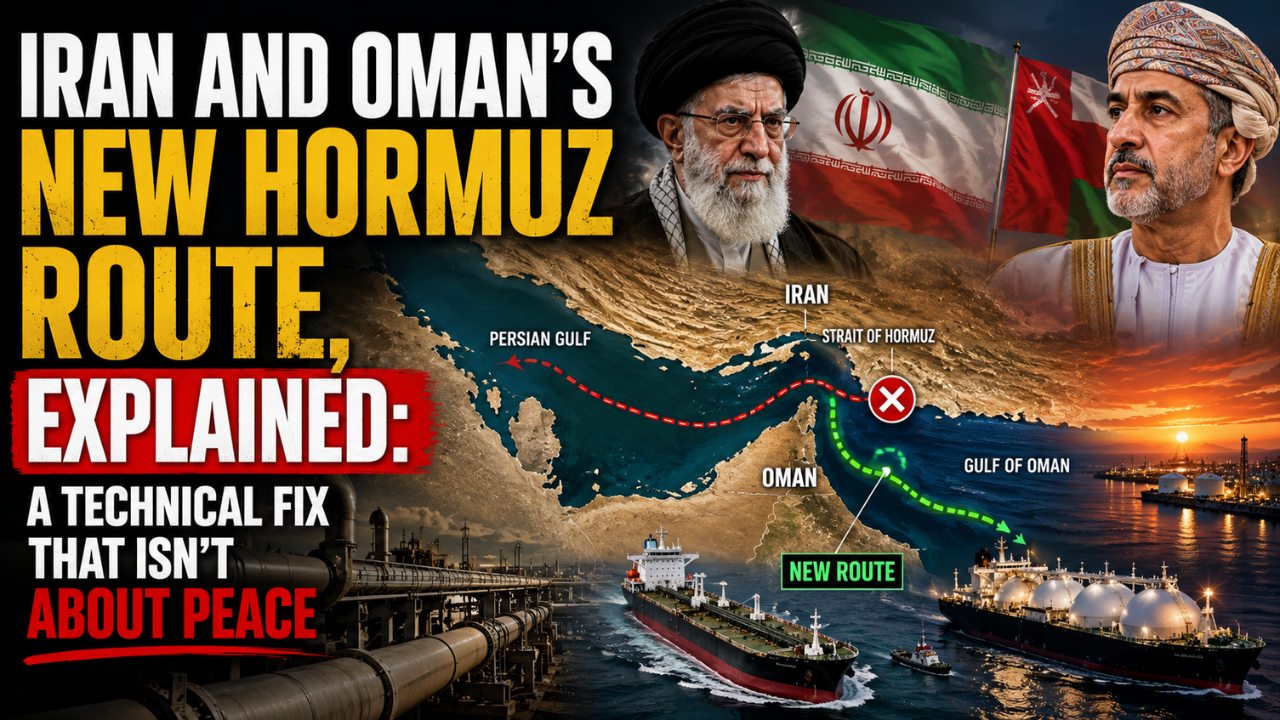
Iran says it’s not talking to the United States. In the same breath, its foreign ministry spokesperson confirmed talks with Washington were set to begin the very next afternoon. Meanwhile, a quieter, separate negotiation with Oman over how ships actually move through the Strait of Hormuz is reportedly close to done. Understanding the difference between these two tracks is the key to understanding where this conflict actually stands.
What is happening?
Iran and Oman are negotiating a temporary shipping corridor through the Strait of Hormuz, and according to Iran’s own officials, that negotiation is nearly finished. According to GlobalSecurity.org, citing Iran’s state news agency IRNA, Iranian Foreign Ministry spokesperson Esmaeil Baqaei said the talks are focused on establishing a temporary corridor that would function as a single two-way route, rather than the multiple separate lanes ships have historically used to pass through the strait.
The specifics of the plan are genuinely technical. According to Al Jazeera, Iran’s Foreign Minister Seyed Abbas Araghchi said at a Sunday cabinet meeting that negotiations between Iran and Oman are in their “final stages.” Yahoo News reported the proposed model would have tankers and cargo ships enter the Strait of Hormuz on a northern route through Iranian territorial waters, merging what had previously been separate northern and southern corridors — the southern one running through Omani waters — into a single circular route that would remain in place only until a permanent replacement can be agreed upon.
Crucially, Iranian officials have gone out of their way to separate this deal from the broader question of the strait’s overall status. Al Jazeera reported Baqaei explicitly stated that “an understanding between Iran and Oman on a new route has nothing to do with whether the Strait of Hormuz is reopened or remains closed.” In other words, this is not Iran announcing the strait is fully open again — it’s a narrower technical arrangement running in parallel to that larger, unresolved question.
Why did this happen?
The roots of this specific negotiation trace back to the June 18 memorandum that formally ended the earlier phase of the US-Iran war. According to GlobalSecurity.org’s reporting, Baqaei said Iran accepted responsibility under that memorandum to help manage future navigation through the strait, and Tehran had immediately begun working to restore maritime traffic to pre-war levels within a 30-day window specified in the deal.
That effort collapsed, according to Iran’s own account. GlobalSecurity.org reported Baqaei’s claim that those restoration efforts were disrupted after the United States “violated the agreement by launching military attacks against Iran before the deadline expired and reinstating an unlawful maritime blockade and restrictions on Iranian oil exports” — Iran’s framing for the fighting that reignited in July, which we’ve covered separately as it unfolded.
There’s also a specific grievance behind why Iran wants a different route structure than before. According to GlobalSecurity.org, Baqaei argued that the southern route through Omani waters — a corridor Washington had specifically promoted after the original Islamabad Memorandum of Understanding — actually contradicted that memorandum and created both environmental and national security concerns for Iran. He went further, claiming some vessels using that southern route had been transporting military equipment, in violation of the original understanding that the corridor should carry only commercial shipping. That accusation is central to why Iran is pushing for a different route design now, rather than simply reopening what existed before the fighting resumed.
Who is affected and how?
For global shipping, the practical effect of this new corridor — once finalized — would be a genuinely different Strait of Hormuz than the one that existed before the war. According to Deutsche Welle’s reporting, via Malay Mail, the planned new arrangement restricts free passage compared to the pre-conflict period, potentially allowing Iran to control which ships enter the strait, while specifically denying passage to warships. That’s a meaningfully different regime than the internationally recognized Traffic Separation Scheme that governed the strait before the conflict — one where Iran holds considerably more direct control over who moves through one of the world’s most important oil chokepoints.
The timing also matters enormously, because it’s colliding directly with a separate, higher-stakes track. According to Al Jazeera, Iran’s spokesperson explicitly rejected the idea that the Oman talks were connected to any negotiation with the United States, stating flatly: “We are not having negotiations with the United States.” That denial came on the very same Monday that, according to the same report, President Trump had said just one day earlier that talks with Iran would begin that Monday afternoon, with Trump expressing optimism that an agreement on both the Strait of Hormuz and Iran’s “denuclearization” could soon be reached — a claim that directly contradicts Iran’s public denial of any US negotiations happening at all.
There’s also unfinished business layered into this same set of statements. Al Jazeera reported that Baqaei said Iran would take “every necessary action” to hold Ukraine accountable for its recent attack on an Iranian vessel — a reference to Ukraine’s July 25 strike on a vessel it said was transporting Iran-linked military cargo, a flashpoint we’ve also covered as its own escalating thread connecting the Ukraine war to the broader Iran conflict.
What happens next?
Whether the Iran-Oman deal actually gets finalized. With Araghchi describing the talks as in their “final stages” as of this weekend, the coming days should show whether this narrower technical arrangement is actually completed, and what the finalized route looks like in practice.
Whether Iran’s public denial of US talks holds up. Given the direct contradiction between Iran’s insistence that it isn’t negotiating with Washington and Trump’s own confirmed statement about talks beginning Monday, how this discrepancy resolves — or whether both things are somehow simultaneously true through separate channels — is worth watching closely.
Whether the new corridor actually restores shipping confidence. Even once a route is agreed, the deeper question is whether global shippers trust an arrangement where Iran holds more direct control over strait access than under the previous internationally recognized scheme — particularly given how quickly the last ceasefire collapsed over exactly this kind of dispute.
Key takeaway
- Iran and Oman are in the final stages of negotiating a temporary Strait of Hormuz shipping corridor that would merge previously separate northern and southern routes into a single circular route, with Iran explicitly stating this has “nothing to do with” whether the strait is formally open or closed
- Iran blames the collapse of its original 30-day post-ceasefire commitment on the US, which it accuses of violating the June 18 memorandum by resuming strikes and reinstating a naval blockade before the deadline expired
- The new arrangement would give Iran significantly more direct control over strait access than the previous internationally recognized route system, including the ability to deny passage to warships — even as Iran publicly denies separate reports that US-Iran talks were beginning the same week