India vs Brazil
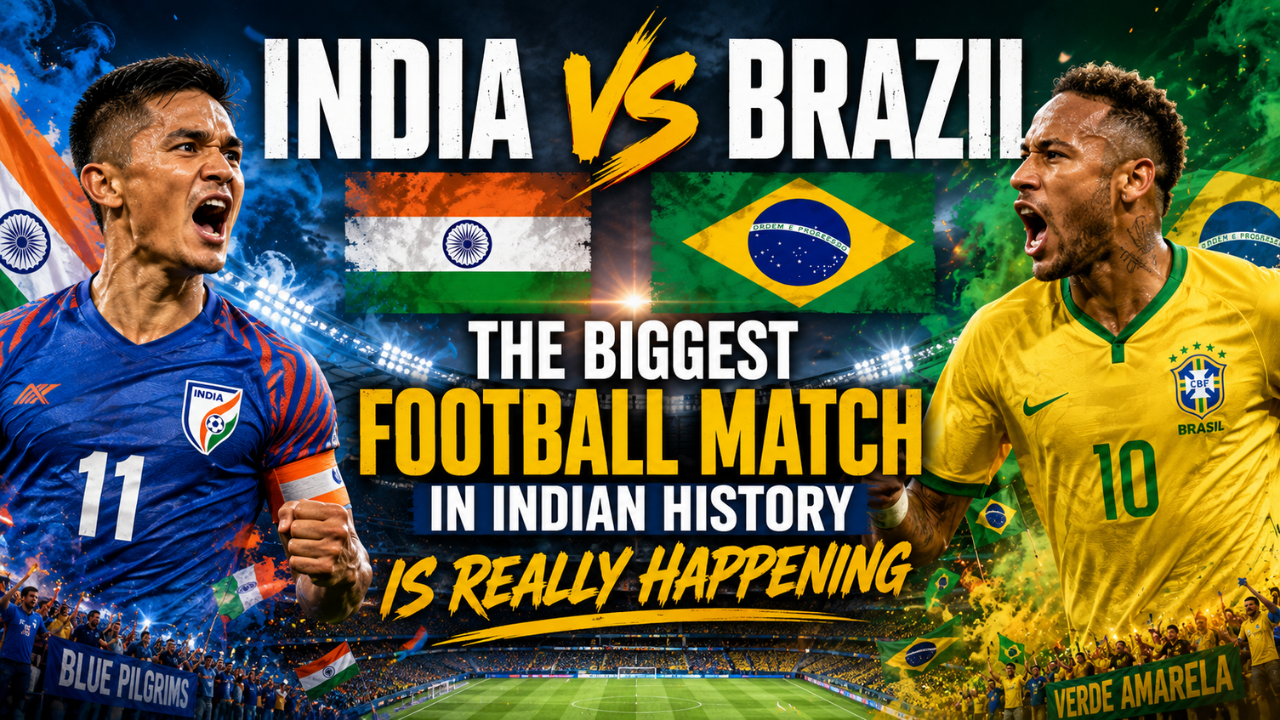
For the first time, India will share a pitch with the most successful national team in football history. On October 3, 2026, five-time World Cup champions Brazil will play a friendly against India in Kolkata, and it’s already being called the biggest match Indian football has ever hosted.
What is happening?
Brazil’s senior men’s national team will play India in an international friendly on October 3, 2026, at the Vivekananda Yuba Bharati Krirangan (Salt Lake Stadium) in Kolkata. According to the All India Football Federation’s official announcement, Brazil is the most successful men’s national team in football history, and this fixture will mark the highest-ranked opposition India have faced since the FIFA World Ranking was introduced in 1992, with Brazil currently ranked fifth in the world.
The AIFF was direct about what this means for Indian football. According to the same announcement, AIFF Deputy Secretary General M Satyanarayan said welcoming a team of Brazil’s stature is “an extraordinary moment” for the sport in the country. According to Outlook India’s coverage, the match has been confirmed for Kolkata. It is already generating attention well beyond typical sports coverage, being treated as a genuine cultural moment rather than just another friendly fixture.
Why did this happen?
Kolkata is a deliberate and symbolic choice of venue. The city has a long, deep relationship with Brazilian football, specifically; as Outlook India’s piece notes, the connection dates back decades, and India is known for having one of the largest Brazilian football fan bases outside of Brazil itself, with Kolkata often considered the emotional heart of that fandom in the country.
The scale of the gap between the two teams is worth being honest about. Outlook India’s own framing captures it well: the Seleção operate at the pinnacle of footballing excellence, possessing technical mastery and a continuous conveyor belt of world-class talent playing in the biggest leagues on Earth, while India remain a perennially developing team, still striving to establish a foothold even at the continental level. This isn’t a match between comparable sides; it’s a chance for a developing footballing nation to test itself against the sport’s most decorated program. Outlook India
That gap is exactly why the fixture matters so much for Indian football’s development. As Outlook India put it, this friendly will serve as a crucial opportunity for homegrown Indian players to share a pitch with world icons, and it doubles as a massive promotional vehicle to inspire the next generation of Indian footballers.
There’s also a broader context worth noting: Brazil, coached by Carlo Ancelotti since May 2026, have already secured their place at the 2026 World Cup and have been deliberately scheduling friendlies against a wide range of footballing styles and regions as part of their preparation Brazilian Football Confederation coordinator Rodrigo Caetano said the team’s plan includes friendlies against South Korea and Japan in October, African national teams in November, and top-tier European teams in the following months, specifically because facing different soccer styles from around the world brings valuable experience ahead of major tournaments. India’s fixture fits that same broader pattern of Brazil testing itself against varied opposition, even as the Kolkata match holds far greater significance for India than for Brazil. soccerway
Who is affected and how?
For Indian football, the impact goes well beyond the 90 minutes on the pitch. Outlook India frames it as far more than just a result or a learning experience for the players involved; it’s a chance for homegrown talent to measure themselves directly against genuine global icons, and a moment that could meaningfully boost interest in football among young players and fans across the country.
For fans, the occasion is already being treated as a cultural event. Outlook India’s coverage draws a direct line to football’s historical footprint in India, referencing Pelé’s iconic 1977 visit to Kolkata and even football references in Indian popular culture, framing the October fixture as a continuation of a decades-long relationship between Brazilian football and Indian fandom, rather than a one-off novelty match.
For the city of Kolkata and Indian football administration more broadly, hosting a team of Brazil’s stature is also a statement of ambition,n a signal that Indian football, still developing at the international level, is capable of attracting and hosting the very best the sport has to offer, at least for a single high-profile occasion.
What happens next?
Ticket demand and logistics. Given Brazil’s enormous following in India and Kolkata’s particular passion for Brazilian football, demand for tickets to this fixture is likely to be intense, and how the AIFF manages that demand will be its own story in the run-up to October.
Brazil’s broader World Cup preparation. With Brazil already qualified for the 2026 World Cup and deliberately scheduling friendlies against varied footballing styles from different continents throughout the second half of the year, the India fixture is one stop in a much longer preparation calendar that also includes matches against South Korea, Japan, African nations, and top European sides.
What India takes from the experience. For a developing footballing nation still working to establish itself even at the continental Asian level, how India’s players and coaching staff use this fixture, regardless of the scoreline, will be an early indicator of what the match actually contributes to the sport’s development in the country.
Key takeaway
- Brazil, the most successful men’s national team in football history and currently ranked fifth in the world, will play India in Kolkata on October 3, 202, the highest-ranked opposition India have faced since the FIFA World Ranking began in 1992
- Kolkata was chosen deliberately given India’s status as home to one of the largest Brazilian football fan bases outside Brazil itself, with roots going back to Pelé’s famous 1977 visit to the city.
- The match fits into Brazil’s broader 2026 World Cup preparation strategy of playing varied opposition across different continents, while for India it represents a rare, high-profile opportunity to develop domestic talent and grow the sport’s audience nationally