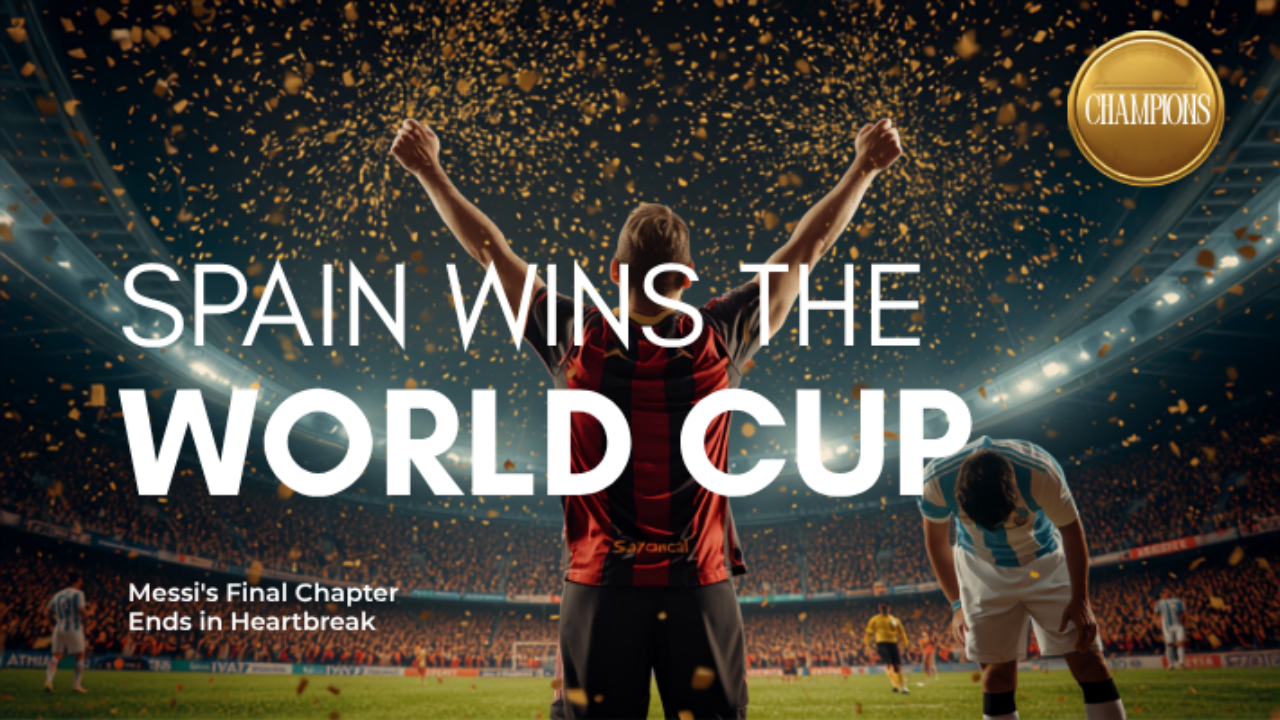
Lionel Messi came into the 2026 World Cup final needing one more win to become the first player ever to lead a team to back-to-back titles since Brazil in 1962. He left MetLife Stadium without it. Spain beat Argentina 1-0 in extra time, completing one of the most dominant World Cup runs in modern history — and closing the book on Messi’s international career the way it began: agonizingly close, but not quite there.
What is happening?
Spain are the 2026 FIFA World Cup champions. According to CBS News, Ferran Torres scored the winning goal in the 106th minute of extra time at MetLife Stadium in East Rutherford, New Jersey, on July 19, sealing a 1-0 victory over defending champions Argentina.
The dominance was total, even though the scoreline was close. As CBS reported, Spain took 15 shots in regulation to Argentina’s none, and Rodri controlled the midfield so completely that Messi was kept almost entirely away from dangerous areas for the full 120 minutes. According to WorldCupPass’s match summary, Argentina managed just two shots across the entire match, with neither on target — a stunningly quiet night by Messi’s standards in what was almost certainly his final World Cup appearance.
There was late drama and late tension. CBS reported that with about four minutes left before the final whistle, Messi won a corner that deflected fortunately toward substitute Giuliano Simeone, who sent the resulting chance high over the crossbar — the closest Argentina came to salvaging the match. After the final whistle, there was pushing and shoving between players, including Argentina’s Leandro Paredes appearing to grab a Spanish player by the throat, according to the same report.
Why did this happen?
Spain’s win wasn’t a surprise result built on luck — it was the product of one of the most complete tournament runs in recent World Cup history. According to FIFA’s official standings summary, Spain conceded only a single goal across the entire tournament en route to the title, an extraordinary defensive record for a team that also had to win the final itself in extra time.
The individual awards tell the story of how Spain won it. As WorldCupPass detailed, Rodri — the same midfielder who nullified Messi in the final — won the Golden Ball as the tournament’s best player. Goalkeeper Unai Simón claimed the Golden Glove after a record 650 consecutive minutes without conceding a goal, an almost unheard-of defensive streak at this level of competition. Pau Cubarsí, still a teenager, was named Best Young Player, pointing to a Spanish squad built with serious depth for years to come.
Argentina’s path to the final was dramatic in its own right. According to Yahoo Sports, Argentina scored twice late to stun England 2-1 in the semifinal, continuing a pattern of late-game rallies that had defined their tournament. But Spain’s 2-0 semifinal win over France, in the same report, showed a team peaking at exactly the right moment — and that composure carried directly into the final.
Who is affected and how?
For Spain, this is a landmark achievement that goes beyond the trophy itself. As WorldCupPass noted, this is Spain’s second World Cup title after 2010, and it makes them the first nation ever to hold both the men’s and women’s World Cups simultaneously — a genuinely historic distinction for Spanish football as a whole. The win also made head coach Luis de la Fuente, at 65, the oldest coach ever to lead a team to a World Cup title, according to CBS.
For Argentina and for Messi specifically, the result closes out one of the greatest international careers in the sport’s history without the storybook ending some fans hoped for. According to CBS, Argentina fell one step short of becoming the first side to win back-to-back World Cups since Brazil in 1962 — a genuinely rare feat in modern football, given how much deeper and more competitive international tournaments have become. It’s also worth noting the historical symmetry: the same report pointed out that this final came exactly 60 years after Argentina beat Spain in the group stage of the 1966 World Cup, and that this was only the second time in history the two nations had met in the tournament at all.
There are winners beyond the final itself, too. England claimed the bronze medal in a stunning 6-4 victory over France in the third-place match, according to FIFA’s own recap, with Bukayo Saka scoring a hat-trick. And in the individual awards race, Kylian Mbappé won his second consecutive Golden Boot with 10 goals and became the World Cup’s all-time leading goalscorer with 22 career goals, per the same FIFA report — a genuine consolation prize atop an otherwise disappointing tournament finish for France.
The event itself was a cultural spectacle as much as a sporting one. According to Today.com’s live coverage, the closing ceremony featured Post Malone and Robbie Williams, while the halftime show brought out Shakira, BTS, Justin Bieber, and Madonna — underlining just how large the commercial and entertainment footprint of this expanded, three-nation World Cup had become.
What happens next?
Messi’s international future. This was widely expected to be Messi’s final World Cup. Whether he continues playing for Argentina in non-World Cup competitions, or steps away from international football entirely, will be one of the most closely watched storylines in the sport over the coming months.
Spain’s new era. With a squad built around a 65-year-old coach and a core of young stars like Pau Cubarsí, Spain enters the next World Cup cycle as the clear favorite to defend their title — a very different position than the “aging golden generation” narrative that followed their 2010 win.
The commercial legacy of the 48-team format. With record global viewership, a three-nation hosting model, and a halftime show featuring some of music’s biggest names, this tournament will likely become the template FIFA uses to justify and refine the expanded format for future World Cups.
Key takeaway
- Spain beat Argentina 1-0 in extra time on July 19, 2026, winning their second World Cup title and becoming the first nation to hold both the men’s and women’s World Cups simultaneously
- Argentina and Lionel Messi fell one win short of becoming the first team to win back-to-back World Cups since Brazil in 1962, with Messi managing only two shots, neither on target, in his likely final World Cup match
- Spain’s title was built on historic defense — conceding just one goal all tournament, with goalkeeper Unai Simón setting a record of 650 consecutive minutes without conceding — while Kylian Mbappé became the World Cup’s all-time leading scorer despite France’s third-place finish